Balatro review: poker's bones, a roguelike's soul
A deckbuilding poker roguelike whose exploding scoring engines and endless build expression justify every hour it quietly steals.

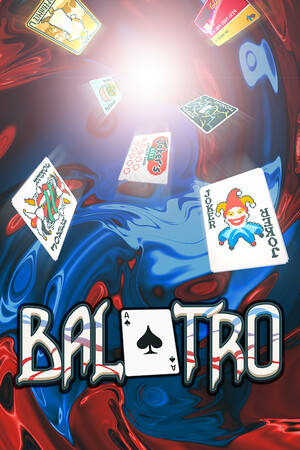
The Scorecard
There is a moment, maybe forty minutes into a good run, when the numbers stop being numbers. I have a Joker that retriggers my played cards, another that multiplies my score for every face card I hold, a deck I have quietly bent toward flushes for the last three rounds, and when I lay down that hand the tally does not tick upward so much as it detonates. Six figures. Then seven. The blind I was terrified of a moment ago is simply gone, vaporized, and I am already grinning at the next one. That feeling, the small chemical bloom of a scoring engine going critical, is the whole of Balatro. Everything else is scaffolding built with unusual care to deliver me back to it, again and again, long after I meant to stop.
I want to be honest about the company you keep here, because Balatro has no story and I refuse to pretend otherwise. There is no protagonist, no world to save, no dialogue. What it has instead is the Jokers, and they are closer to a cast than that description suggests. Each one is a little card with a name, a scrap of pixel art and a single mechanical personality, and over enough hours they acquire the weight of recurring characters. I have favorites. I have Jokers I distrust. Blueprint copies the ability of the Joker to its right, so it becomes whatever the run needs, a shapeshifter I keep hoping to draw. The flavor is thin by design, a smear of card table mystique and hand painted grime, and it never reaches for meaning it has not earned. But personality does not require narrative, and this deck has personality to spare. That is the honest measure of its cast, and it is enough.
The systems underneath are where Balatro reveals how carefully it has been engineered. It borrows the grammar of poker, hands and suits and ranks, and then treats every rule as something you can buy, warp or break. Jokers supply the multipliers. Tarot and planet cards let you level up specific hands or transmute the deck itself. Vouchers rewrite the economy between rounds. The genius is that none of these pieces is impressive alone, and almost all of them combine. Build expression comes from noticing that two mediocre Jokers point at the same idea, then chasing that idea until your whole strategy is a single overtuned instrument. One run I am hoarding a fat deck of low cards for a Joker that scores on quantity. The next I have pruned it to fifteen cards and a razor plan. That run variety, the sense that the roguelike loop keeps handing me a different puzzle from the same box, is the real depth here, and it is considerable. The synergy is not decoration. It is the text.
Where it falters is quieter, and I would be dishonest to skip it. The compulsion that makes Balatro so hard to close is also its softest edge, and the luck can bite. Some runs are decided early, when the shop refuses to offer a Joker that fits and you grind through blinds on a plan that never coheres, watching a promising start starve. Others tip the other way and snowball, the engine so overpowered by the midgame that the final blinds are a formality rather than a fight, tension leaking out of the very climax that should matter most. Neither failure is common, and neither breaks the game, but both remind me that a systemic toy this open will sometimes hand you a run the dice already lost, or already won. The critics who called the balance nearly flawless were mostly right. They were not entirely right.
What stays with me is how little Balatro asks and how much it returns. I have watched the reviews line up behind it, an OpenCritic average of ninety two across sixty odd critics, a Mighty rating, near universal recommendation, PC Gamer naming it their game of the year and The Game Awards handing it a stack of trophies with a Game of the Year nomination on top. That consensus is not hype. It is recognition of a rare thing, a deckbuilder whose meta progression and build expression run so deep that unlocking the final stakes still feels like the beginning of the real game. It is for anyone who has ever loved the moment a plan clicks into place, anyone who likes their strategy served in bite sized runs, anyone willing to lose a weekend to one more hand. It is not for players who need a story to hold onto, or who bounce off the cold arithmetic under the felt. For everyone else, I would only warn you to guard your evenings. Balatro will take them gladly, and you will hand them over smiling.