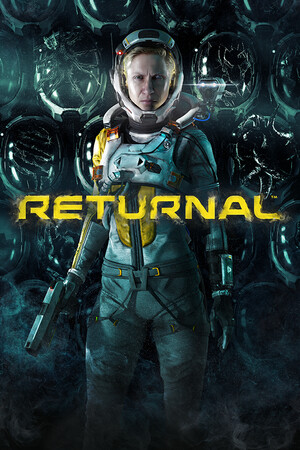
Returnal review: bullet hell that never lets you rest
Housemarque built the tightest third-person bullet hell on the market and then wrapped it in a roguelike that fights you as hard as the aliens do.

The Scorecard
A boss fills the screen with orange. Three overlapping projectile walls closing at once, gaps the width of a hair, and I am threading them at a dead sprint. Dash. I-frames pop. I punch through the first wall clean, land inside the pocket, and my alt-fire is already charged and dumping into the weak point. Selene never stops moving. I never stop moving. For four seconds I am not thinking, I am reading. That is Returnal in the hands, and nothing else on PC feels like it.
The fight is the whole point, so let me start there. Movement is the star. The dash has generous i-frames and a short cooldown, so you are meant to dodge constantly, aggressively, into danger and not away from it. That single design choice turns a shooter into a third-person bullet hell where survival is about routing your body through the gaps, not hiding behind cover. The guns back it up. Every weapon has an alt-fire that recharges on its own timer, so you are always juggling a primary and a heavy hitter, and the good weapons feel distinct in the hand. Recoil is light because the projectiles are the story, not the kick. The adrenaline system ties it all together. Kill without taking a hit and you climb ranks that buff damage, reload, and awareness, and chasing that perfect no-hit streak is a genuine flow state. Projectile readability is elite. Even when the screen is a wall of color, the palette and telegraphs let you parse threats fast enough to survive, and the skill ceiling is sky high. Enemy design leans on aggro pressure from multiple angles, forcing you to keep the camera and your feet honest. This is the best third-person gunplay Housemarque has ever shipped, and it earns the 86 aggregate on Metacritic and OpenCritic on combat alone.
The arena holds up its end. Six biomes, each with its own tone, hazard set, and enemy roster, and the procedural rooms keep encounter design from going stale across a session. The overgrown alien ruins, the crimson desert, the frozen wastes, they all read as distinct spaces with distinct fights. Boss encounters are the peaks. They are long, multi-phase bullet-hell showcases that demand you actually learn patterns, and clearing one is a real payoff. When Returnal is cooking it is tense in the best way. The problem is the sag. The connective tissue between fights, the backtracking through cleared rooms, the stretches of empty traversal, drains the momentum the combat builds. The tension spikes hard and then flatlines, over and over.
Then there is the grind, and this is where I have to name the flaw out loud. Runs are too long. A full clear of a biome sequence can eat well over an hour, and on the original PlayStation release there was no mid-run save at all. You either finished or you lost the whole thing. Critics hammered this at launch and they were right to. The PC port softens the worst of it. You can now suspend a cycle and quit safely without torching your progress, which is the single biggest quality-of-life win the port delivers. It is not a true checkpoint mid-fight, but it means real life does not cost you an hour of clawing forward. The roguelike structure itself is still divisive. The permanent upgrades trickle in slowly, and the loop can feel half-baked next to the razor combat, which is exactly the split reviewers keep landing on: demanding, gorgeous fighting stuck inside a roguelike frame that does not always respect your time.
On the port itself, this is the best version of the game if your rig can handle it. It scales up with high-end hardware and adds proper PC feature support, and most outlets called it a strong conversion. The catch is the demand. This is a heavy game, and lower-spec machines will struggle, so the recommended-buy verdict came with a hardware asterisk in nearly every PC review I read.
Here is the call. Returnal has the best hands-on combat feel of any roguelike shooter on PC, full stop. The dash, the alt-fire juggle, the adrenaline chase, the readability under fire, all of it is world class. It is dragged down by long runs, a save system that only got a partial fix on PC, and a roguelike shell that does not match the fighting. That is a fair 86, and I will hold it to the same ruler as anything else. Who is it for. If you live for high-skill combat and you want a game that respects a fast twitch brain, buy it now and never look back. If long punishing runs and thin mid-run mercy make you bounce, know that going in. For me the fighting is worth every scar.