Against the Storm review: the city builder that respects your time
A roguelite city builder that turns every settlement into a tense series of timed, opportunity-cost decisions, held back only by a dense interface and a meta-loop that eventually starts to rhyme.

The Scorecard
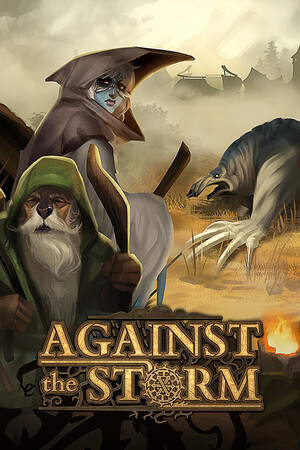
Every settlement in Against the Storm opens with the same quiet interrogation. The rain has not started, your workers are cold, and you have three needs pulling in three directions with resources that cover maybe one and a half of them. The core decision is not which building to place. It is which need you are willing to let go hungry, and for how long. Do you serve the Beavers their fancy planks and keep resolve climbing, or do you starve the good mood to buy time on food before the next storm arrives? The game keeps asking that question on a loop, and the interesting part is that the correct answer changes every time, because the map, the draft, and the biome quietly rewrite the terms underneath you. That is the whole roguelite loop compressed into one sentence: you never get to solve the game, only this settlement.
The economy is where the space actually opens up. Raw goods feed production chains, chains feed complex goods, and complex goods buy resolve and trade. What makes the tempo tense is that nothing is free. Every worker assigned to planks is a worker not gathering food. Every blueprint you draft from the reward screen is a fork you cannot un-choose, so the draft is a genuine opportunity cost engine rather than a menu of upgrades. Pick the crude workstation early and you snowball raw throughput; pick the specialized recipe and you bet on a chain you may never finish before the timer ends. The good settlements feel like the economy is breathing with you, each new recipe unlocking a lane you did not have before. The macro layer on the world map adds another dial, letting you carry cornerstones and perks between runs so a weak start is still a start, not a wall. The result is a decision space that rewards planning without ever letting the plan survive contact with the weather.
The opposition is the clever bit, because there is no enemy army. Your opponent is a timer wearing two masks. Impatience is the Queen tapping her foot, a bar that fills toward failure while you fumble. The storm is the periodic gut punch that degrades production and morale precisely when you can least afford it. Together they function like an AI that never blunders and never bluffs. It simply applies pressure and waits to see whether your economy has slack. Resolve is your counterplay, the currency that turns a happy settlement into reputation points and eventually a win before the clock runs you over. The information clarity mostly holds. You can trace why resolve is dropping and which need is unmet, and the honest reading is that the systems tell you the truth if you are willing to read them. That willingness is the catch, and I will name it plainly.
Here is the honest pushback, and it lands on two fronts that the wider consensus already flags. The UI is dense to the point of hostility on a first run. Resource counters, need panels, and recipe trees stack until the screen feels like a spreadsheet that learned to nag, and newcomers will drown in information before they learn which numbers matter. That density is a real cost to players, not a badge of depth. The second cost is repetition of the meta-loop. Once you internalize the strong openings, a lot of settlements start rhyming, and the padding shows in the runs where you are executing a known plan rather than solving a new one. Critics land Against the Storm around the high eighties on OpenCritic, a Mighty rating recommended by the overwhelming majority, and they are right, but the same reviews keep circling those two complaints for a reason.
So where is the strategy real and where is it busywork? The real depth lives in the first thirty minutes of every settlement, in the blueprint draft, the biome read, and the triage of which need to abandon. Those are decisions with teeth. The busywork lives in the late game of a well-solved run, where you are clicking through resolved problems to reach a foregone conclusion, and in the fiddly micro of reassigning workers that the interface makes clumsier than it needs to be. The game is at its best when it is hard and worst when it is merely long.
The calculus, then. Against the Storm is one of the sharpest strategy hybrids in years because it turns a city builder into a series of tense, timed decisions where every choice costs you something real. It earns its praise and it earns its two persistent knocks, the wall of interface and the sameness that creeps in once the loop is solved. Same ruler I use on everything: does the decision space stay interesting, and does the game respect my time. Mostly yes on both. This is for players who want a strategy game that thinks in opportunity cost and does not mind reading a dashboard to do it. If you bounce off dense UI or you need a fresh scenario every session, temper the enthusiasm. Everyone else should light the fires and stay.