Total War: Warhammer III review: the trilogy's sprawling finale
A magnificent decision space eventually undermined by an opposition that too often forgets to push back.

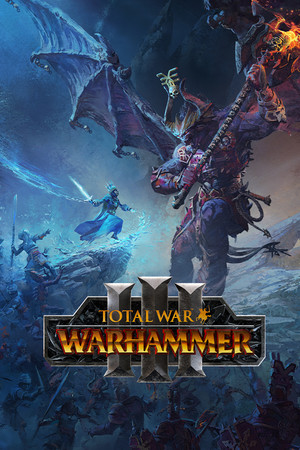
The Scorecard
The core decision in Total War: Warhammer III is a question of fronts, and it never stops asking it. Every campaign map is a fan of open borders, and every turn I spend consolidating one is a turn a rival spends metastasizing on another. The game hands you eight wildly asymmetric ways to play, each with a bespoke faction mechanic that rewrites the calculus. Playing Kislev, I hoard devotion and time my invocations. Playing the Daemons of Chaos, I chase a glory economy that pulls me toward whichever god I have been feeding. The interesting part is that these mechanics are not cosmetic. They change what a good turn even looks like, and that is the highest compliment I can pay a strategy game. The choice of which front to feed and which magic to lean on is a live opportunity cost, and the map does not let you defer it for long.
The economy underneath is where the space opens up. Settlements, tech, and recruitment feed a tempo that punishes the timid and the greedy in equal measure. The realm of Chaos campaign, the one exclusive to Warhammer III proper, is a race against a portal-hopping structure that keeps the clock loud. But the real prize, the one most players actually live in, is the combined Immortal Empires sandbox that arrived after launch and stitched all three games into one map. That is where the macro layer breathes. I build a war economy, weigh a tech tree against immediate military need, and decide whether to snowball a weak neighbor now or bank the turns for a bigger swing later. Diplomacy was overhauled and it shows, and the siege rework gave those battles more geometry to think about. The systems are generous with meaningful decisions and stingy with dead turns, which is the balance most 4X hybrids miss.
The opposition is where I have to be cold, because this is the game's real fault line. Critics landed Warhammer III in the mid-eighties, an 86 on OpenCritic and roughly 85 on Metacritic for PC, and the praise for the campaign loop is deserved. But the battle AI does not always push back honestly. At its worst it fixates on a handful of flying units and forgets the rest of my line exists, or it stalls in formations that hand me the fight. Later patches shuffled its priorities and did not consistently improve them, and there were stretches where players felt the AI regressed. Information clarity on the battlefield is generally good, and the faction mechanics are legible once you learn their grammar, but an opponent that surrenders positioning for free is an opponent that flattens the tactical decision space. When the AI is on, the real-time battles are among the best the series has produced. When it is off, I am not being tested, I am being processed.
That leads to the harder question of depth versus busywork. The strategy is real in the midgame, where the map is a genuine puzzle of fronts and confederation offers, where absorbing an ally is a calculated consolidation rather than a formality. The padding shows at the edges. The original end-game crises mostly spawned extra armies, a difficulty spike measured in unit count rather than in decisions, and Creative Assembly has spent years reworking them into staged End Times events precisely because the first version was busywork wearing a crown. Confederation can also short-circuit the map when the AI hands you factions cheaply. The good news is that the sandbox is deep enough to absorb these soft spots, and the ongoing free updates have steadily moved the busywork toward the exits.
So the calculus. I have to grade two games here, and I will name it plainly. At launch this was a rough object, hobbled by optimization that chewed VRAM and stuttered across the campaign map, by a buggy battle AI, and later by a DLC model that priced Shadows of Change at series-high numbers for thin content and earned a Mostly Negative review wave for the trouble. That costs players real money for real disappointment, and it belongs in the ledger. But the thing on my drive now, patched and expanded into Immortal Empires, is the fullest strategy sandbox the franchise has ever shipped. It is for the player who wants a vast asymmetric decision space and will forgive an opponent that sometimes phones it in. It is not for anyone who needs the AI to be a worthy general every single battle. I score it an 8.4, an aggregate that honors a superb space and refuses to pardon the opposition that too often declines to occupy it.