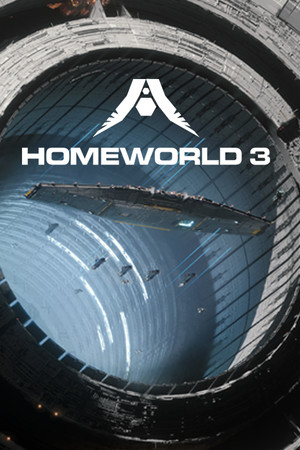
Homeworld 3 review: gorgeous in space, wobbly in command
Homeworld 3 nails the one question of where to place your fleet in true 3D, then declines to build a deep enough strategy layer or a story worth the wait.

The Scorecard
Every battle in Homeworld 3 opens with the same quiet question, and it is the question I came back to the series for: where, exactly, do I put my ships in three dimensions. Not left or right, not a firing line drawn across a flat map, but above, below, behind, tucked into the shadow of a derelict hull while a strike group swings wide overhead. This is the decision space that makes the franchise worth the wait. Homeworld has always treated the vertical axis as a real resource rather than decoration, and the third entry doubles down by cramming the fights inside megaliths, canyons of dead ships, and drifting terrain you can hide behind, flank around, and shoot through. The core decision is genuinely interesting because cover finally exists in a space game, and using it well is a skill rather than a formality. Position beats numbers more often than I expected, and when I read an approach correctly and dropped a torpedo frigate wall onto an exposed flank, the payoff felt earned.
The economy is where my enthusiasm cools into respect rather than love. Resourcing runs on the familiar loop of harvesting, banking, and pouring that bank into a production queue, and fleet persistence carries your surviving ships between missions so every loss has weight beyond the moment. That persistence is the smartest tempo lever in the design. It teaches opportunity cost the honest way, by making a reckless trade in mission three a shortage in mission five. The trouble is that the strategic layer sitting on top of these decent bones is thinner than I wanted. Once you understand the production rhythm there are not many meaningful macro forks to chase, and the composition puzzle resolves into a small handful of reliable answers. I rarely felt punished for a lazy build order and rarely rewarded for a clever one. The tempo is fine. It is not deep.
The opposition is competent and occasionally clever, and it is also where the information problem in a 3D space bites hardest. Reading a battlefield that has genuine depth is hard, and the interface does not always help. I lost ships to threats I never clearly saw, not because the AI outplayed me but because the camera and the readability of a crowded volume worked against me. Pathing is the other honest complaint, and it is not a small one. Units clip, stall, and take scenic routes around terrain that should not confuse them, which turns careful micro into a fight against my own fleet as much as the enemy. When the AI does apply pressure, the counterplay is legible enough to reward good composition. It just does not push hard enough or often enough to make skirmish a lasting home. The War Games co-op roguelike mode is the attempt at that lasting home, and reception landed divided for good reason. It escalates well and empties out fast, a clever frame around a shallow pool.
So I arrive at the split that defines this game. It is gorgeous, and the spectacle is not empty, because the terrain and the vertical fights are load bearing rather than a screensaver. But the strategic layer under all that light is thin, and the campaign story is a real step down from what this series earned. The plot spreads a few ideas across twelve missions and never fleshes any of them out, then keeps stopping the good part to deliver cutscenes I would happily skip. To be fair, the individual mission design is strong. Each of the twelve offers a distinct scenario, and no two blur together, which is more than most campaigns manage. That craft at the mission level is where strategy is real. The padding is everywhere the game asks me to care about a narrative it did not write with enough conviction to sell.
Here is the calculus, and I am not going to inflate it. Critics landed this mixed to decent, in the mid to high seventies on the aggregate sites, and after my own time in the fleet that consensus is fair. Homeworld 3 is a beautiful, honest, occasionally frustrating tactics game that nails the one decision at its heart and then declines to build a deep enough structure around it. The 3D positioning is real. The economy is functional. The AI and the interface leave points on the table, and the story leaves more. Who is it for, then. It is for the player who wants a stunning 3D real time tactics sandbox and cares about formation, flanking, and cover far more than plot or a bottomless meta. It is for the Homeworld faithful who will forgive the thin strategy layer for the sight of a fleet threading a canyon of dead titans. If you want the deepest RTS on the shelf, this is not that. If you want the prettiest space battles that still ask a real tactical question, put your ships above the enemy and enjoy the view.