Hi-Fi Rush review: character action that lands on the beat
The best-feeling character action game to come out of nowhere in years, and it earns almost every note.

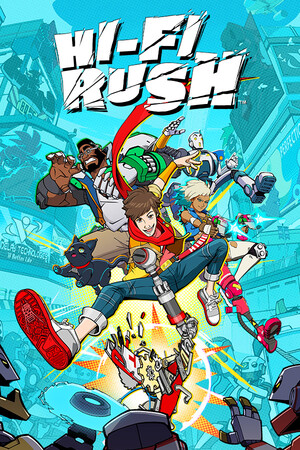
The Scorecard
The first time I parried on the beat, something clicked in my hands that I have not felt in a character action game in years. A big yellow robot winds up, the telegraph lands square on the downbeat, I tap block right as the drum hits, and the whole screen snaps back at me in perfect time. That is Hi-Fi Rush. Everything, your swings, your dodges, your parry window, all of it lives on the tempo of the track. When you sync up, you stop counting frames and start hearing them. That is the flow state this game is chasing, and more often than not it lands the hit.
Let me be blunt about how it fights. Chai swings a magnetic guitar as his main weapon and every input wants to sit on the beat. You do not have to play on tempo to survive, and the game is smart enough to reward you even when you are off, but the ceiling only opens up when you commit to the rhythm. Land your combos on-beat and the damage scales, the animation gets flashier, the score climbs. The parry is the heart of it. Enemies flash a clear cue, you answer inside the window, and the readability here is genuinely elite. Color-coded tells, on-beat wind-ups, telegraphs you can hear as much as see. Special enemies force specific answers, a partner call to rip a shield off, a timed counter to break a guard, and juggling those calls mid-combo is where the real skill ceiling sits. There are no cheap deaths here because nothing is hidden. The stagger and hitstop feel deliberate, weighty, satisfying. This is combat built by people who understand aggro management and encounter design, not just spectacle.
The arena is where the cracks start to show. The opening act is a masterclass. Tight rooms, escalating enemy mixes, tension that builds and releases like a good drum fill. The set-piece bosses are the peak, huge rhythm-locked slugfests that turn the whole fight into a track you have to play. Critics almost universally called the front half of this game a knockout, and they are right. But the level design between fights is thin. You walk forward. You platform. And that platforming is stiff. The jump feels floaty and imprecise, tuned for combat air-dashes and not for landing on a ledge, and a lazy camera makes basic hops harder than they should be. That costs players. It breaks the flow the combat works so hard to build. Reviewers flagged this across the board and I am with them.
Then there is the grind. This is a fifteen-ish hour game and the middle sags. A couple of chapters lean on recycled enemy layouts and repetitive encounters, the exact criticism you will see echoed on every aggregate. The enemy variety plateaus before the game is done introducing ideas, so a stretch in the belly of the campaign feels like padding between the good stuff. Progression is clean, you buy new moves and combos with in-game currency and the shop keeps giving you toys, but the friction is in the pacing, not the systems. And the finale swings the other way, a difficulty spike on the final boss that feels less like a test of skill and more like a numbers wall, damage cranked so high it stops being about reading attacks and starts being about attrition. It is the one moment the readability the game prides itself on takes a back seat to raw punishment.
So here is the call. Hi-Fi Rush is the best-feeling character action game to arrive out of nowhere in a long time, and the consensus backs that up. It sits Mighty on OpenCritic near an 89 with over ninety percent of critics recommending it, and it earned that on the strength of its combat feel, its animation, its cast, and one of the sharpest soundtracks in the genre. It is not flawless. The platforming is stiff, the middle repeats itself, and the last boss picks a cheap fight. None of that sinks it. This is for anyone who lives for the moment a system finally clicks in your hands, for the character action crowd that grew up on stylish combos and score chasing, and for the rhythm-heads who want their timing to actually mean something in a brawler. Play it on-beat and it sings. It is a hard recommendation, warts and all.